
研究ライブラリ
に根ざした執筆

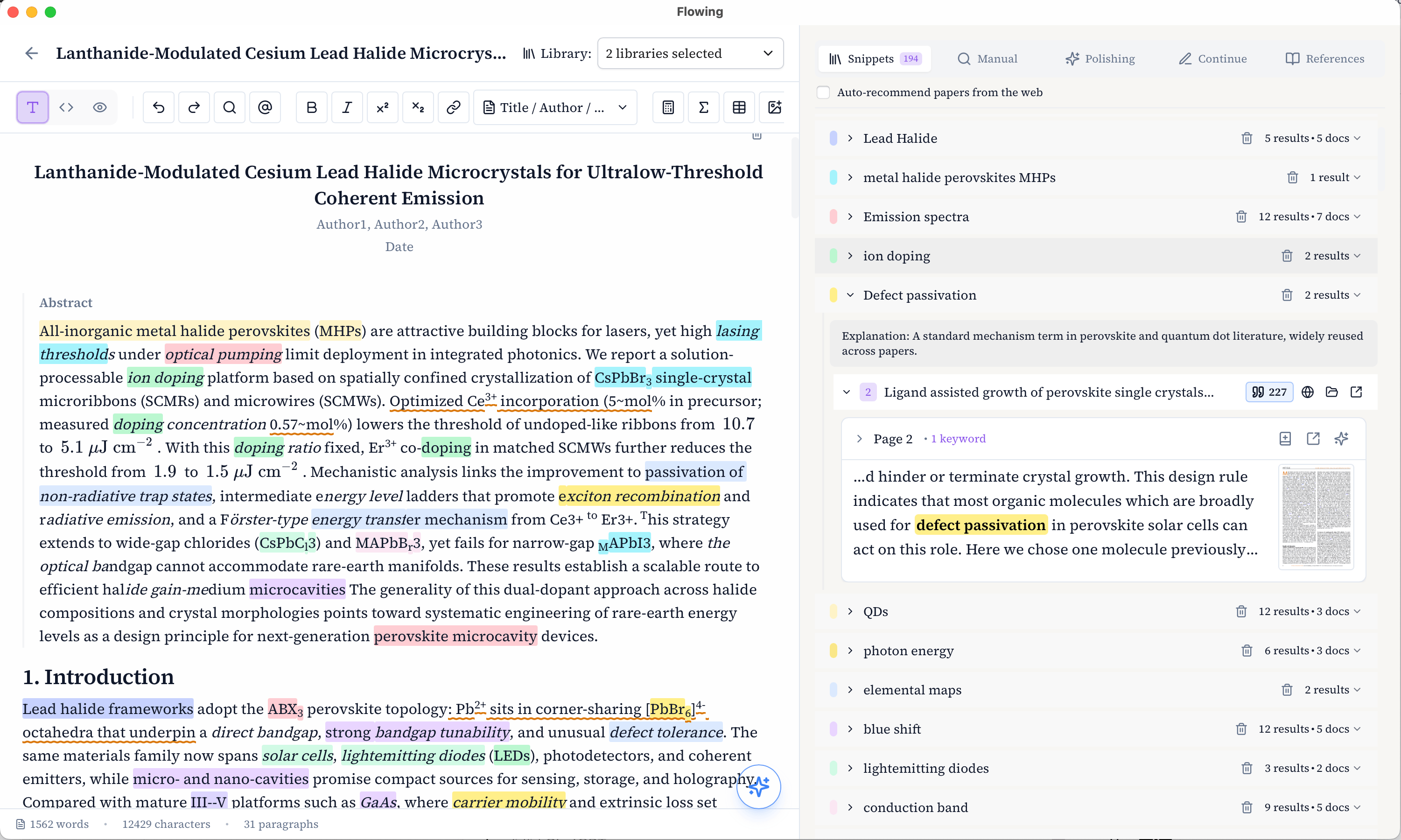
あなたの研究ライブラリから適切なスニペットを引き出し、AI で書き進め、草稿を常に根拠に根ざす。

研究ライブラリに根ざした執筆

次世代の学術執筆ワークフロー

リコール · エビデンス · AI 執筆

Flowing のメインワークスペース — 左で執筆、右で研究スニペットと参考文献

Flowing の違い

YOUR DRAFT

A passage worth keeping.

Selecting reaction conditions requires balancing conversion with the formation of the desired product. Published studies offer a starting point for identifying which experimental variables deserve closer examination.

Prior work suggests that influences the reaction pathway and ; catalyst loading may also shape selectivity.

↗ Select a highlighted phrase to recall related passages.
“temperature”2 passages · 2 papers

Comparisons between studies depend on the conditions behind each reported value. Catalyst loading, reaction time, and the temperature window must be considered before attributing a change in yield to a single factor.

The next experiments will vary temperature while keeping the remaining conditions fixed. Measuring both yield and product distribution will help distinguish improved conversion from a shift toward competing pathways.

RECALLED PASSAGES
PDF · p. 12
Temperature dependence

Increasing the temperature from 40 °C to 60 °C reduced the reaction yield from 68% to 42%, indicating less favorable product formation at the higher temperature.

PDF · p. 8
Tested temperature range

The effect was observed between 20 and 30 °C. Temperatures outside this range were not tested.

PDF · p. 24
Product selectivity

Product selectivity varied with reaction temperature. The highest isolated yield was obtained at 40 °C under the tested conditions.

PDF · p. 18
Yield optimization

Under otherwise identical conditions, optimized catalyst loading improved isolated product yield while preserving selectivity.

Snippet Card

01 / Snippet Card

論文名ではなく、覚えている一節から

執筆中の言葉に合う箇所をローカル PDF から見つけ、原文ページ上で強調表示。前後の文脈までワンクリックで確認できます。

YOUR DRAFT

Temperature and yield

Temperature is a key variable in the comparison of reaction conditions. The reported yields provide a basis for examining how thermal changes affect product formation within the experimental system.

At 60 °C, the reaction yield increased from 42% to 68%. This improvement suggests that higher temperature favors product formation.

Interpreting this comparison requires separating the reported result from its proposed explanation. Yield alone does not establish a mechanism; catalyst stability and competing reaction pathways also need to be considered.

Further experiments should examine these contributions individually, using matched reaction conditions to distinguish temperature effects from changes in catalyst activity or product selectivity.

EVIDENCE CHECK
× Contradicted

The numbers are reversed.

The source reports a decrease from 68% to 42% at 60 °C, not an increase. The draft reverses both the values and the direction of the effect.

RESEARCH ARTICLE · DEMOp. 12
3.2 Temperature-dependent yield

Increasing the temperature from 40 °C to 60 °C reduced the reaction yield from 68% to 42%, indicating less favorable product formation at the higher temperature.

Results are interpreted within the experimental conditions described here. The selected passage is highlighted for comparison with the manuscript.

Y = nproduct / ninitial × 100%(3)
68%42%4060T (°C)
Fig. 2 | Yield at two temperatures. Illustrative schematic.
Illustrative source excerpt · not a published paper

Evidence Card

02 / Evidence Card

その主張を原文で確かめる

主張と根拠箇所を並べて確認。赤は矛盾、緑は直接的な裏付け、黄は重要な条件を示し、各カードから正確な出典へ戻れます。

YOUR DRAFT

Keep the thought moving.

Temperature-dependent changes in reaction yield provide a useful starting point for selecting operating conditions. Applying these findings to a new system, however, requires attention to the range examined in the original experiments.

✦ WRITING WITH YOUR LIBRARY

Generating two sentences with linked source passages.

A follow-up study could extend the temperature series while holding catalyst loading and reaction time constant. Comparing yield and selectivity at each step would help establish whether the same trend persists.

LIBRARY EVIDENCE
Each passage links to its source · illustrative example

Autocomplete

03 / Autocomplete

根拠を添えて、思考の続きを書く

Flowing は現在の論旨を自然に続け、各主張を支える原文も一緒に表示します。生成される文章と根拠をその場で確認し、流れを止めずに採用できます。

Ness Labs

Featured Tool

Ness Labs が選出

Tools for Thought に掲載

Ness Labs は、よりよく考え、学び、働くためのツールとアイデアを探究する知識プラットフォームです。Flowing は、Notion や Obsidian などの生産性ツールも登場する Tools for Thought シリーズに掲載されました。

Ness Labs でインタビューを読む

How it works

From library to draftを7つの手順で

参考文献を取り込み、リッチテキストと LaTeX で執筆し、根拠付きオートコンプリート、想起、文脈つき質問、推敲、続きを書く——すべてローカルライブラリに根ざします。

Watch step-by-step tutorials

研究ワークフロー

いまの研究ワークフローに収まる

Flowing は執筆環境であり、文献管理ツールではありません。いま書いている章に必要な PDF を取り込み、正規のライブラリは既存の場所に置いたままにできます。

PDF と索引はこのコンピュータに保存 · ライブラリ全体はアップロードしません · AI 利用時のみ選択した文脈を送信 データの流れ

  • PDF

    ローカル取り込み、検索、プレビュー、書き出し。

  • LaTeX

    リッチテキストと並べて .tex を編集し、PDF をライブプレビュー。

  • BibTeX

    原稿内の BibTeX や番号付き参考文献ブロックを解析。

  • Zotero

    代替ではなく補完。正規ライブラリは Zotero に残します。

  • リッチテキスト

    アプリ内の Word 風編集。原稿を Word(.docx)または PDF で取り込み・書き出しできます。

  • 引用

    @ でライブラリから構造化引用を挿入し、References サイドバーを使えます。

文献ライブラリはこれまで通り Zotero を。Overleaf や Word も、すでに合っている場所で使い続けてください。Flowing は執筆段階に集中し、論文・引用・原稿の文脈を書きながら一つにまとめます。

Flowing と Zotero の関係

Overleaf との直接同期は現在サポートしていません。

From the blog

Ideas behind Flowing

AI 支援による学術執筆を、研究者自身の知識と文献に根ざしたものにするという考え方が、研究者や学術関係者の間で関心を集めています。Substack に参加して、この議論を追いかけてください。

書き始める

参考文献を、論文を磨くための実用的な道具に変える。

Retrieve by keyword, ask with full context, basis-backed polish from your library.