
اكتب مستندًا إلى ملفات PDF الخاصة بك

أسّس كتابتك
على مكتبة أبحاثك

استخرج المقاطع المناسبة من مكتبة أبحاثك، واكتب بالذكاء الاصطناعي، وأبقِ كل مسودة مرتكزة على الأدلة.

جرّب سير الكتابة الكامل مجانًا

شاهد عرض المنتج
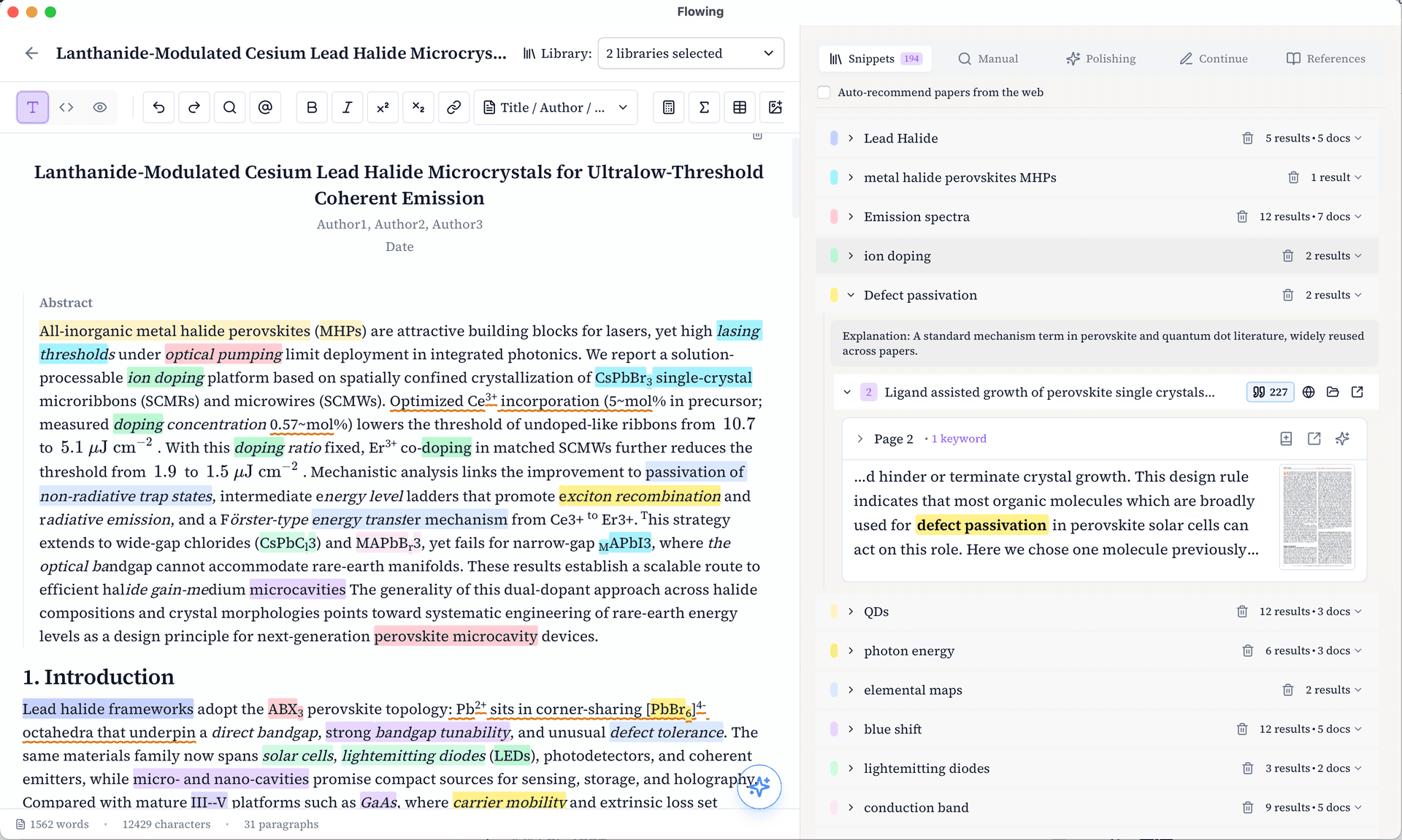
مساحة العمل الرئيسية في Flowing — الكتابة على اليسار والمقتطفات والمراجع على اليمين

من البحث إلى الكتابة

من أوراق متفرقة إلى كتابة تستند إلى المصادر

أبقِ مكتبة أبحاثك بجانب مسودتك. يستعيد Flowing المقاطع ذات الصلة أثناء الكتابة، ويساعدك على التحقق من ادعاءاتك بالرجوع إلى المصدر، ويدعم جملتك التالية بأدلة يمكنك فحصها.

  • استعادة المقاطع
  • التحقق من الأدلة
  • متابعة الكتابة
أسّس كتابتك على مكتبة أبحاثك

ما يميز Flowing

YOUR DRAFT

A passage worth keeping.

Selecting reaction conditions requires balancing conversion with the formation of the desired product. Published studies offer a starting point for identifying which experimental variables deserve closer examination.

Prior work suggests that influences the reaction pathway and ; catalyst loading may also shape selectivity.

↗ Select a highlighted phrase to recall related passages.
“temperature”2 passages · 2 papers

Comparisons between studies depend on the conditions behind each reported value. Catalyst loading, reaction time, and the temperature window must be considered before attributing a change in yield to a single factor.

The next experiments will vary temperature while keeping the remaining conditions fixed. Measuring both yield and product distribution will help distinguish improved conversion from a shift toward competing pathways.

RECALLED PASSAGES
PDF · p. 12
Temperature dependence

Increasing the temperature from 40 °C to 60 °C reduced the reaction yield from 68% to 42%, indicating less favorable product formation at the higher temperature.

PDF · p. 8
Tested temperature range

The effect was observed between 20 and 30 °C. Temperatures outside this range were not tested.

PDF · p. 24
Product selectivity

Product selectivity varied with reaction temperature. The highest isolated yield was obtained at 40 °C under the tested conditions.

PDF · p. 18
Yield optimization

Under otherwise identical conditions, optimized catalyst loading improved isolated product yield while preserving selectivity.

Snippet Card

01 / Snippet Card

استرجع المقطع، لا اسم الورقة فقط

أثناء الكتابة يعثر Flowing على المقاطع المطابقة لكلماتك، ويبرزها في صفحة المصدر، ويبقي سياقها الكامل على بُعد نقرة واحدة.

YOUR DRAFT

Temperature and yield

Temperature is a key variable in the comparison of reaction conditions. The reported yields provide a basis for examining how thermal changes affect product formation within the experimental system.

At 60 °C, the reaction yield increased from 42% to 68%. This improvement suggests that higher temperature favors product formation.

Interpreting this comparison requires separating the reported result from its proposed explanation. Yield alone does not establish a mechanism; catalyst stability and competing reaction pathways also need to be considered.

Further experiments should examine these contributions individually, using matched reaction conditions to distinguish temperature effects from changes in catalyst activity or product selectivity.

EVIDENCE CHECK
× Contradicted

The numbers are reversed.

The source reports a decrease from 68% to 42% at 60 °C, not an increase. The draft reverses both the values and the direction of the effect.

RESEARCH ARTICLE · DEMOp. 12
3.2 Temperature-dependent yield

Increasing the temperature from 40 °C to 60 °C reduced the reaction yield from 68% to 42%, indicating less favorable product formation at the higher temperature.

Results are interpreted within the experimental conditions described here. The selected passage is highlighted for comparison with the manuscript.

Y = nproduct / ninitial × 100%(3)
68%42%4060T (°C)
Fig. 2 | Yield at two temperatures. Illustrative schematic.
Illustrative source excerpt · not a published paper

Evidence Card

02 / Evidence Card

هل يدعم المصدر هذا الادعاء؟

قارن كل ادعاء بالمقاطع التي تسنده: الأحمر للتعارض، والأخضر للدعم المباشر، والأصفر لقيد مهم، مع الرجوع دائمًا إلى المصدر الدقيق.

YOUR DRAFT

Keep the thought moving.

Temperature-dependent changes in reaction yield provide a useful starting point for selecting operating conditions. Applying these findings to a new system, however, requires attention to the range examined in the original experiments.

✦ WRITING WITH YOUR LIBRARY

Generating two sentences with linked source passages.

A follow-up study could extend the temperature series while holding catalyst loading and reaction time constant. Comparing yield and selectivity at each step would help establish whether the same trend persists.

LIBRARY EVIDENCE
Each passage links to its source · illustrative example

Autocomplete

03 / Autocomplete

واصل الفكرة مع أدلتها

يواصل Flowing الفكرة في سياقها ويجلب معها المقاطع الداعمة. شاهد النص وهو يظهر، وافحص الدليل بجوار كل ادعاء، ثم اقبل المتابعة من دون قطع تدفق الكتابة.

Ness Labs

Featured Tool

بتقدير من Ness Labs

ضمن سلسلة Tools for Thought

Ness Labs منصة معرفية تستكشف الأدوات والأفكار التي تساعد الناس على التفكير والتعلم والعمل بصورة أفضل. وقد أصبح Flowing ضمن سلسلة Tools for Thought إلى جانب أدوات إنتاجية مثل Notion وObsidian.

اقرأ المقابلة على Ness Labs

معايير FLOWING

اختباران منفصلان: جودة الكتابة واكتشاف الأخطاء

عبر 7 تخصصات و130 ورقة مختلفة و280 موضع كتابة ثابت، حقق الإكمال التلقائي مع Evidence أفضلية صافية عابرة للتخصصات بقدر 31 فوزًا؛ واكتشفت Evidence Card نسبة 91.4% من ستة أنواع واضحة من الأخطاء.

AUTOCOMPLETE · THE SAME 280 FIRST ATTEMPTS

The with-card version was judged better in 138/280 first attempts

Seven fields · 40 positions eachFull results →

OVERALL PREFERENCE · ALL 280

49%

AI judge preferred cards in 138/280

CARD USE AND COMPARABLE PAIRS

Fixed positions · first outputs · all counted

All frozen positions280/280 · 100%

Text plus model-reported card use

50%140/280

Both wrote text; comparable pairs

107/280· 38%

140 first outputs explicitly used literature cards.

WHEN CARDS WERE USED AND BOTH WROTE

With-card version preferred

65%70/107
About the same7% · 7/107
Without cards better28% · 30/107

EVALUATION

BlindOutputs anonymized and reviewed in both orders

How it works

From library to draft في سبع خطوات

استورد المراجع، اكتب بالنص الغني وLaTeX، أكمل تلقائيًا بالأدلة، استرجع المقاطع، اسأل مع السياق، اصقل ثم تابع الكتابة—كلها مرتبطة بمكتبتك المحلية.

Watch step-by-step tutorials

سير العمل البحثي

ينسجم مع سير عملك البحثي الحالي

Flowing بيئة كتابة وليست مدير مراجع. استورد ملفات PDF الخاصة بالقسم الذي تكتبه؛ أبقِ مكتبتك المعيارية حيث هي.

ملفات PDF والفهرس تبقى على هذا الجهاز · لا يُرفع المكتبة كاملة · يُرسل السياق المحدد فقط عند استخدام الذكاء الاصطناعي مسار البيانات

  • PDF

    استيراد محلي، بحث، معاينة، وتصدير.

  • LaTeX

    حرّر .tex بجانب النص الغني مع معاينة PDF مباشرة.

  • BibTeX

    يحلّل كتل BibTeX والمراجع المرقّمة الموجودة في المسودة.

  • Zotero

    مكمل وليس بديلاً. أبقِ Zotero للمكتبة المعيارية.

  • نص غني

    تحرير بأسلوب Word داخل التطبيق. استيراد وتصدير المخطوطات بصيغة Word (.docx) أو PDF.

  • الاستشهادات

    أدرج استشهادات منظّمة من المكتبة بـ @، مع شريط References.

استمر في استخدام Zotero لمكتبة المراجع، وOverleaf أو Word حيث يناسبان سير عملك أصلًا. يركز Flowing على مرحلة الكتابة: يجمع أوراقك والاستشهادات وسياق المسودة وأنت تكتب.

علاقة Flowing بـ Zotero

المزامنة المباشرة مع Overleaf غير مدعومة حالياً.

From the blog

Ideas behind Flowing

تحظى فكرة إرساء الكتابة الأكاديمية المدعومة بالذكاء الاصطناعي على معارف الباحثين ومراجعهم باهتمام متزايد بين الباحثين والمتخصصين الأكاديميين. انضم إلى Substack لمتابعة النقاش.

ابدأ الكتابة · Flowing

حوّل المراجع إلى أداة حقيقية لصقل ورقتك.

Retrieve by keyword, ask with full context, basis-backed polish from your library.

شرح سير العمل

اكتب فقرة مراجعة أدبية موثقة بالمصادر خلال 5 دقائق

تعرّف على سير العمل الكامل، من استرجاع المقاطع المهمة إلى صياغة النص والتحقق من الأدلة وراء كل ادعاء.

مشاهدة الفيديو الكامل على YouTube